Request Information
Request Information
By submitting this form, you agree to receive information about the Tulane School of Professional Advancement’s programs via email, phone and/or text. You may opt out at any time.
SCHOOL OF PROFESSIONAL ADVANCEMENT
Paralegal Studies
Get Your Degree Faster with 8-Week Terms
Get Your Degree Faster with 8-Week Terms, Starting Fall 2026
ABA Approved

Tulane has the oldest ABA-approved legal studies program in the region. Our curriculum reflects the rigor and quality that ABA requires and legal employers demand.
Paralegals are trained professionals who work under the supervision of licensed attorneys. Paralegals are not lawyers and are not permitted to practice law or to provide legal services directly to the public, except as permitted by law.
Launch Your Career in Paralegal Studies
The Paralegal Studies Program helps students pursue careers as efficient, ethical legal professionals. Students gain the skills, wisdom, and integrity to assist attorneys in courts, governmental agencies, law firms, and other legal settings. You can even apply to law school after graduation, if you so choose.
To ensure compliance with ABA requirements, all students must complete at least three PARA classes (9 credits) via in-person or synchronous remote format.

Affordable
Tuition

No Test
Scores

Rolling
Admission

Multiple
Start Dates

Expert
Faculty
Bachelor’s Degree Program & Paralegal Certificate
The Bachelor of Arts in Paralegal Studies degree and accompanying Paralegal Certificate, awarded simultaneously, require 120 credits for completion, including 36 credits in the PARA major. Carefully sequenced coursework begins with core skills classes that emphasize legal research, writing, and analysis, along with law office technology and other practical aspects of the legal profession. In ensuing semesters, upper-level electives allow you to explore important areas of substantive law. Finally, the practicum course, with its 100-hour law office internship and classroom component, lets you apply your new skills in a professional setting, while developing professionalism and career success skills in the classroom.
Our PARA courses are offered in asynchronous (fully online), synchronous remote (weekly meetings via Zoom), and in-person formats. Subject to the ABA requirement that each student complete at least 3 classes (9 credits) synchronously, you may take your PARA classes from wherever you may be, in the format that suits your needs and preferences.
Online Bachelor's Degrees
- ABA-approved
- Learn legal research, writing, and analysis, along with law office technology and other practical aspects of the legal profession.
- Curriculum includes a practicum course with a 100-hour law office internship component.
- 120 credits (36 major credits).
- A minimum of nine credits (three courses) must be completed in person or in synchronous remote format.
- Simultaneously earn the Bachelor of Arts in Paralegal Studies degree and a Paralegal Certificate.
- Bachelor of Arts in Paralegal Studies & Paralegal Certificate - ABA Approved
- 33 credits
- Understand how state and federal civil, criminal, and administrative courts function.
- Conduct legal research and investigations using print and digital tools; translate findings into clear briefs and memos.
- Apply The Bluebook standards accurately and consistently.
- Create professional memoranda, correspondence, and standard litigation filings for state and federal courts.
- Manage documents, billing, case files, dockets, and trial prep using industry standard software.
- Interpret and follow the ABA Model Rules of Professional Conduct, plus NALA and NFPA ethical guidelines.
- Bachelor of Interdisciplinary Studies with a Major in Paralegal Studies
Post-Baccalaureate Certificate
- ABA-approved
- A minimum of nine credits (three courses) must be completed in person or in synchronous remote format.
- Online Post-Baccalaureate Certificate - ABA-Approved.
Minor
- For students who are majoring in other disciplines and wish to develop general knowledge of U.S. law in preparation for law school or other pursuits.
- May be completed entirely online.
- The Paralegal Minor is not approved by the American Bar Association’s Standing Committee on Paralegals, does not yield a Paralegal Certificate on completion, and is not intended to prepare graduates for careers as paralegals.
- Minor in Paralegal Studies
Accelerated Degrees
- Upon earning 75 credits toward a bachelor’s degree, including all 36 credits in the major, students may apply for admission to a School of Professional Advancement master’s degree program.
- Subject to program director’s approval.
- 4+1 Program: Bachelor's to Master's in 5 years
Visit our Frequently Asked Questions page to learn more about our programs and degrees
Paralegal Studies Courses Offered in 8-Week Terms
The Paralegal Studies program is transitioning to 8-week terms. Core Paralegal Studies courses for students pursuing the Bachelor of Interdisciplinary Studies Paralegal major, the Bachelor of Arts in Paralegal Studies and the Post-Baccalaureate Certificate in Paralegal Studies will be offered in the 8-week format beginning Fall 2026.
- PARA 2010 Introduction to the Legal System
- PARA 3020 Legal Research
- PARA 3030 Legal Writing I
- PARA 3050 Litigation I
- PARA 3060 Litigation II
- PARA 3070 Legal Technology I
- PARA 4100 Legal Technology II or PARA 4200 Legal Research & Writing II
- PARA 4190 Legal Ethics
Visit the course catalog for more information.
How an 8-Week Term Works
A course taken during an eight-week term covers the same material and earns the same credit as a traditional 16-week course. Classes are offered in an asynchronous format, offering you greater flexibility to accommodate your schedule. This accelerated format lets you focus on shorter classes while staying on track to complete your degree.
Not sure if an 8-Week term is right for you? For more information, visit our 8-Week Terms page.

“I worked full-time as a ramp supervisor at the airport while I completed my degree at Tulane thanks to the School of Professional Advancement program that is tailored to help working professionals obtain a degree with online and night classes”

Faculty Who Practice What They Teach
Our faculty of practicing attorneys and paralegals bring real-world legal experience, as well as immediate access to the professional networks that support career success.
You'll take core legal skills courses emphasizing legal technology, research, writing, and analysis. We also offer a full menu of electives that allow you to explore important areas of substantive law. Your final-semester practicum class teaches job search skills and includes a 100-hour internship.

Faculty Feature
Jacqueline Putnam Epstein, J.D.
Program Director, Professor of Practice, Paralegal Studies
Jacqueline has held numerous leadership roles with the American Bar Association and the Louisiana State Bar Association over the course of her career, including service as a Delegate to the ABA House of Delegates for the State of Louisiana and as a member of the ABA House of Delegates' Resolutions and Impact Review Committee.
Meet the Advisory Board
The Paralegal Studies curriculum is guided by experienced faculty and a knowledgeable advisory board that helps ensure the most up-to-date and relevant skill sets are being taught to our students.
Featured Members
 Judicial Law Clerk, Division G, Orleans Parish Civil District Court
 Paralegal, Database & Certified Records Manager, City of New Orleans
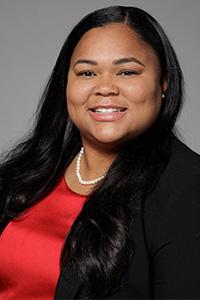 Assistant Director of Human Resources at The Roosevelt New Orleans Hotel
 Senior Partner, Law Offices of Steven B. Witman
Paralegal Studies Graduates at Work

Many of our graduates are now pursuing successful careers as paralegals in law firms, courts, corporations, government agencies, non-profit legal service providers, and other legal offices, while others enter law school and become attorneys. Graduates of our program have access to a robust network of alumni and potential employers. Paralegal Studies graduates are employed across the region, pursuing fulfilling careers as:
- Paralegal
- Office Managers
- Human Resource Professionals
- Court Clerks
- Investigator
- Contract Administrator
- Insurance Adjusters
Engaging & Flexible Student Experience, On-Campus & Online

Partnerships that translate into industry certifications, credit for experience, & career advancement opportunities.

We’ve developed the most interactive courses around.

Our courses are constantly refreshed and informed by what leaders in the legal field expect from graduates.

Navigate degree requirements and prepare for the workforce with help from our academic advisors and career counselor.
Paralegal Studies Program Learning Outcomes
The Paralegal Studies Program provides our students with the skills, wisdom, and integrity to create, communicate and conserve knowledge and to pursue careers as efficient, ethical legal professionals who are prepared to assist attorneys in courts, governmental agencies, law firms, and other legal services offices, or to apply to law school after graduation, if they choose.
On completion of the Paralegal Studies Program curriculum, graduates will have the knowledge and skills to:
- Describe and analyze the jurisdictions and functions of the state and federal civil, criminal, and administrative court systems.
- Perform legal research and factual investigations using both print and electronic methods and summarize findings in legal memoranda and briefs.
- Cite authorities consistent with the adopted legal citation manual (The Bluebook: A Uniform System of Citation.)
- Draft memoranda of law and legal correspondence.
- Identify, draft, and file standard pretrial and litigation documents in Federal and State Courts.
- Use industry-standard law office technology to organize and manage documents, files, billing data, and dockets for trial and other law practice management purposes.
- Identify and apply the ABA Model Rules of Professional Conduct and the NALA and NFPA ethics guidelines.
- Describe and analyze the differences among the jurisdictions and functions of the state and federal civil, criminal, and administrative court systems.
- Interpret and apply legal terminology.
- Describe the primary differences between the Louisiana Civil Law legal system and the common law legal system.
- Perform legal research using both traditional and electronic methods and summarize findings in legal memoranda and briefs.
- Perform factual investigations using both traditional and electronic methods.
- Cite authorities consistent with the adopted legal citation manual (The Bluebook: A Uniform System of Citation).
- Draft memoranda of law and legal correspondence.
- Locate, identify, and apply state and federal court filing and e-filing requirements.
- Draft the documents required to initiate, file, and respond to a civil action.
- Draft discovery requests and responses and pre-trial motions.
- Use industry-standard law office technology to organize and manage documents, files, billing data, and dockets for trial and for other law practice management purposes.
- Identify and apply the rules and principles of legal ethics applicable to the paralegal profession.
Paralegal Studies Facts at a Glance
Tulane School of Professional Advancement accepts students on a rolling basis, year-round. Start dates every August, January, and May. We never require test scores or recommendations. Visit our Admissions Process page to learn more.
All tuition is charged by the credit hour and we have minimal fees. Visit our tuition page to see our current tuition rates and use our net price calculator.
We strive to make a Tulane School of Professional Advancement education affordable for all students. Learn about financial aid, discounts and scholarship opportunities here.

Earn credit for your work experience through a portfolio assessment. Undergraduates can earn up to 24 portfolio credits. Graduate students can earn up to 6 portfolio credits.
The School of Professional Advancement offers career advising to all enrolled students.

Lambda Epsilon Chi Honor Society
The Paralegal Studies Program at Tulane University’s School of Professional Advancement offers eligible students the opportunity to be inducted into Lambda Epsilon Chi (LEX), the national academic honor society recognizing excellence in paralegal and legal studies at AAfPE member institutions.
LEX membership is awarded to students and graduates who demonstrate superior academic achievement. Eligibility includes students in the Bachelor of Arts in Paralegal Studies program with an overall GPA of at least 3.4 and a major GPA of at least 3.5, as well as students in the Post-Baccalaureate Certificate Program with a GPA of at least 3.5.
Inductions are held each spring. Inductees receive pins and certificates, and undergraduate members are also presented with purple and gold graduation sashes.
For more information, please contact Paralegal Studies Program Director Jacqueline Epstein.
Frequently Asked Questions
Students who live outside the New Orleans area can participate in our in-person or synchronous classes via Zoom. In these classes, students and instructors meet and interact one evening per week, typically from 6:00 P.M. to 8:50 P.M., with participants joining from the classroom in campus or from remote locations, via Zoom. Assignments and examinations are circulated via Canvas, our learning management system.
Yes, with the exception of those who already are employed as paralegals, all students are required to complete PARA 5900 – Paralegal Studies Practicum, which includes a 100-hour law office internship and a classroom component that focuses upon professionalism, legal ethics, and career success skills.
No, we assist you every step of the way. The Paralegal Studies Program maintains a pool of participating internship law offices that includes large and small law firms and non-governmental organizations throughout the region, covering a variety of practice areas.
The Paralegal Studies Program provides several avenues through which you may learn more about the practice of law and the broad world of legal services. All members of our adjunct faculty work full-time as attorneys or paralegals in private practice, government, the court system, in-house, and other areas. All are accessible and happy to help our students. The Paralegal Studies Program also partners with the New Orleans Paralegal Association (NOPA), whose Paralegal Mentoring Program offers tremendous support to our students. Not sure who to call? Contact Program Director, Jacqueline Epstein.
For these questions, the Paralegal Studies Program’s Peer Mentoring program is ready to help! Contact Program Director, Jacqueline Epstein. You will be matched with a senior Paralegal Studies Program student who will support and guide you toward success. For all academic questions (and declaring your major), please always reach out to the Assistant Director of Academic Advising, Colleen Timmons, who will advise you in choosing the classes you need, in the correct sequence, to ensure timely and successful completion of your degree.
Tulane’s Paralegal Studies Program does not accept the transfer of credits for paralegal courses completed at paralegal or legal studies programs that were not approved by ABA’s Standing Committee on Paralegals at the time the courses were taken.
Consistent with Tulane School of Professional Advancement’s undergraduate credit transfer policy, students pursing the Bachelor of Arts in Paralegal Studies may be permitted to transfer in up to 18 (50%) of the 36 legal studies/paralegal course credits required for the PARA major, provided each course (1) meets all School of Professional Advancement undergraduate course transfer requirements; (2) was completed at a paralegal or legal studies program that was approved by ABA’s Standing Committee on Paralegals at the time the class was completed; and (3) has been reviewed and approved by the Paralegal Studies Program Director.
While the Paralegal Studies Program provides a well-rounded legal education, you can tailor your experience by choosing electives that align with your interests, such as family law, intellectual property, real estate, criminal, or bankruptcy law. Your practicum internship further boosts your expertise by giving you hands-on experience in a legal setting that matches your career goals.
Application Deadlines
Visit our Admissions page for more information on the admissions process. For a complete list of important dates, see our Academic Calendars page. Our Register for Classes page has information on registering for classes.
Fall
16-week Fall Term: August 1
8-Week Fall Term I: August 10
8-Week Fall Term II: October 11
Spring
16-Week Spring Term: January 1
8-Week Spring Term I: January 4
8-Week Spring Term II: March 7
Summer
8-Week Summer Term: May 10