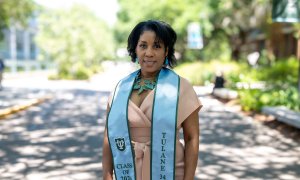
Tulane SoPA graduate completes degree after life-altering diagnosis
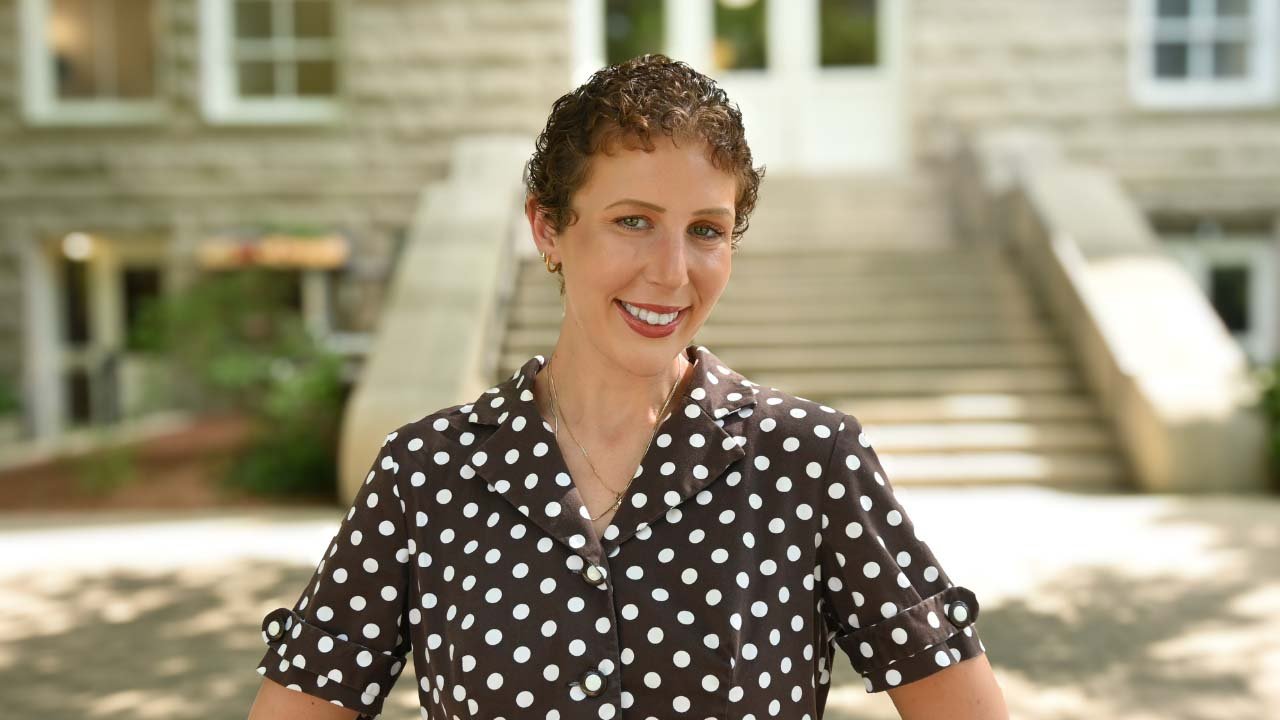
For most graduate students, commencement represents the finish line of a long academic journey. For Rhett Anderson, her Master of Professional Studies in Homeland Security Studies represents a year of reinvention and perseverance in the face of devastating setbacks.
Anderson enrolled in the Tulane University School of Professional Advancement Emergency & Security Studies program with a clear vision for her future—complete a three-year commitment to the Air Force ROTC program and commission into the U.S. Space Force upon graduating.
In September 2025 everything changed when she was diagnosed with stage two Hodgkin’s lymphoma.
Anderson describes her diagnosis as more than a medical crisis. It was a heartbreaking professional crossroads because it medically disqualified her from the military career she had spent over half a decade working toward.
“Being disqualified from the service was the worst thing that had ever happened to me,” said Anderson. “That was what I wanted. That was why I was here, and right at the end, when I’m this close, it’s derailed.”
Faced with the emotional weight of an uncertain future and the physical toll of chemotherapy, Anderson chose to remain in New Orleans and complete both cancer treatment and graduate school on her terms rather than return to the support of her family in Vermont and finish her degree remotely.
“I was kind of sitting with myself, and I thought I have to finish what I started,” said Anderson. “I decided to jump into every other opportunity that I could to move forward.”
She immersed herself in campus life, co-founding the Tulane Indigenous Students, Healers, Leaders and Allies (ISHLA) organization and contributing to research in the Tulane Department of Native American and Indigenous Studies.
Anderson notes that she could not have succeeded without the support of the Tulane community including friends, peers, professors and university case management staff.
“It's remarkable how much people will come together to support you here at Tulane,” said Anderson.
Her personal experience influenced her capstone work, which focused on mental health in the military. Anderson developed BEACON, an early-warning model designed to identify eating disorder risk among service members through behavioral indicators with a goal to help non-medical leadership recognize warning signs and connect individuals to support.
In April she presented her project on campus at the 2026 Tulane Research, Innovation and Creativity (TRICS) summit. She continues to explore ways to implement her framework in other military spaces.
As graduation approaches, Anderson says her experience has reinforced the decision to keep moving forward, even when the future no longer looks the way it once did.